Coquitlam history · 1959–1990 · Canada's first permanent road course
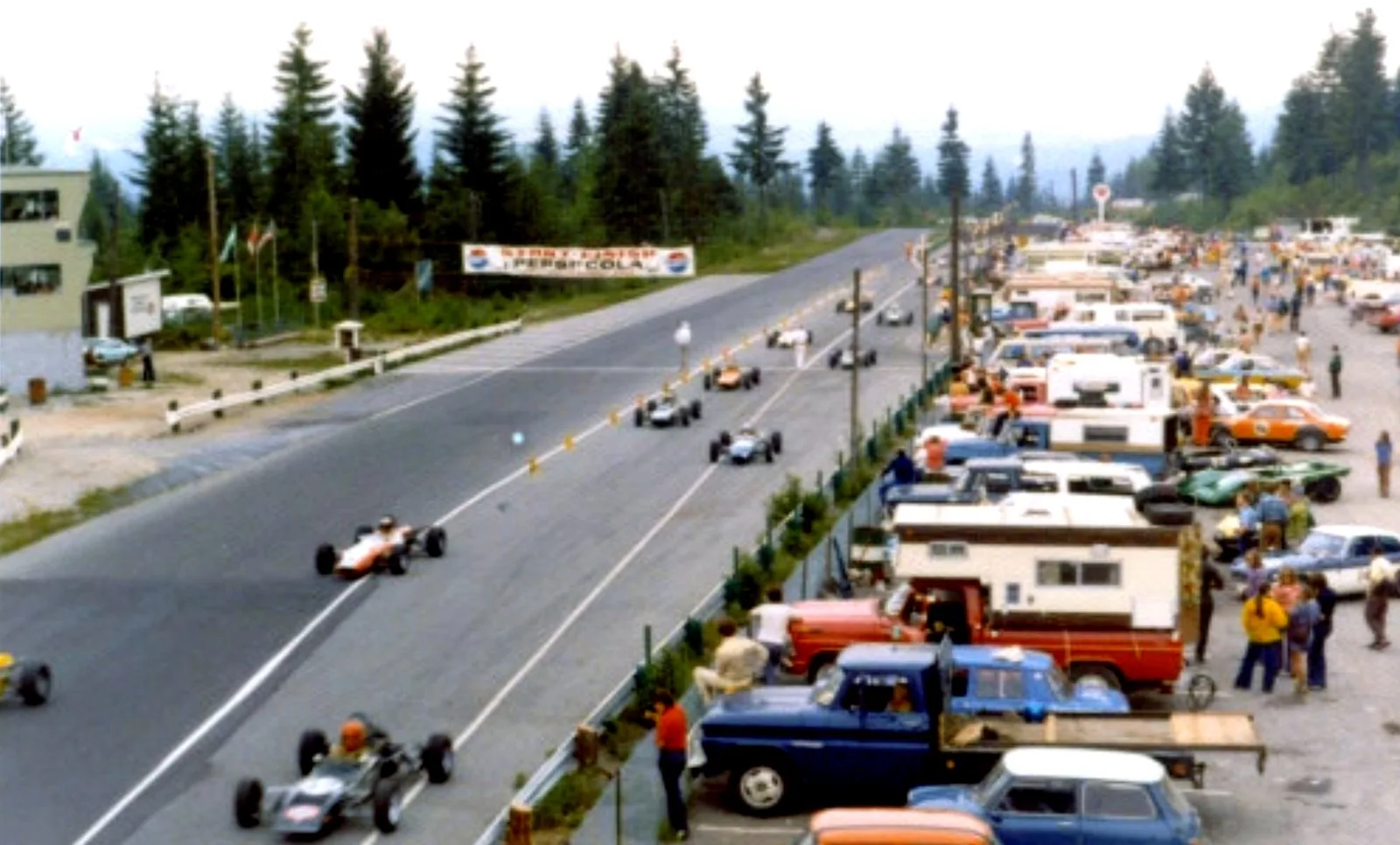
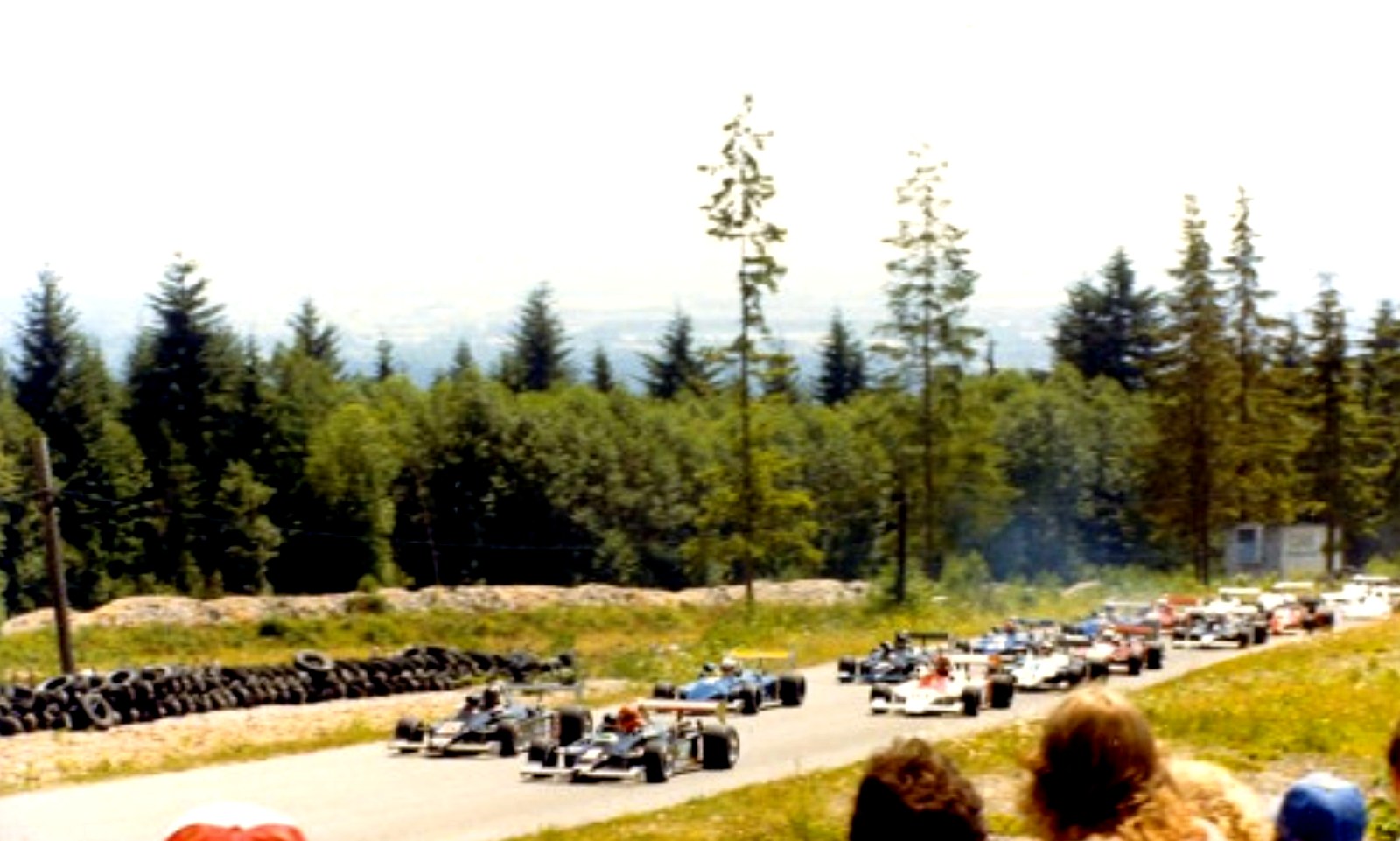
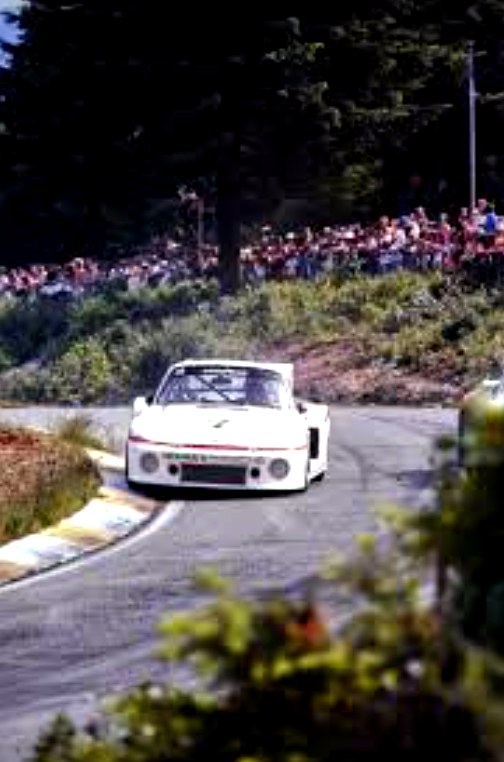
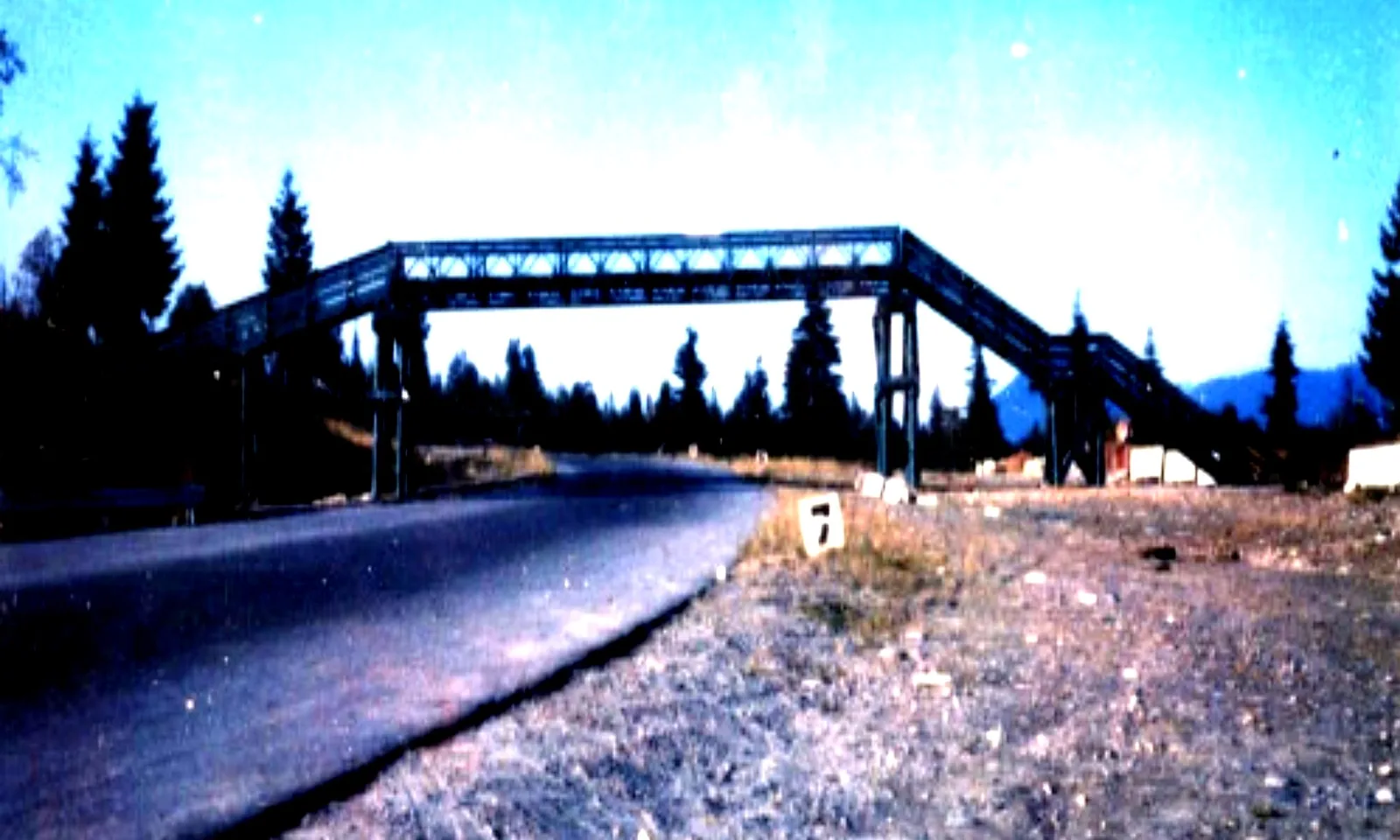
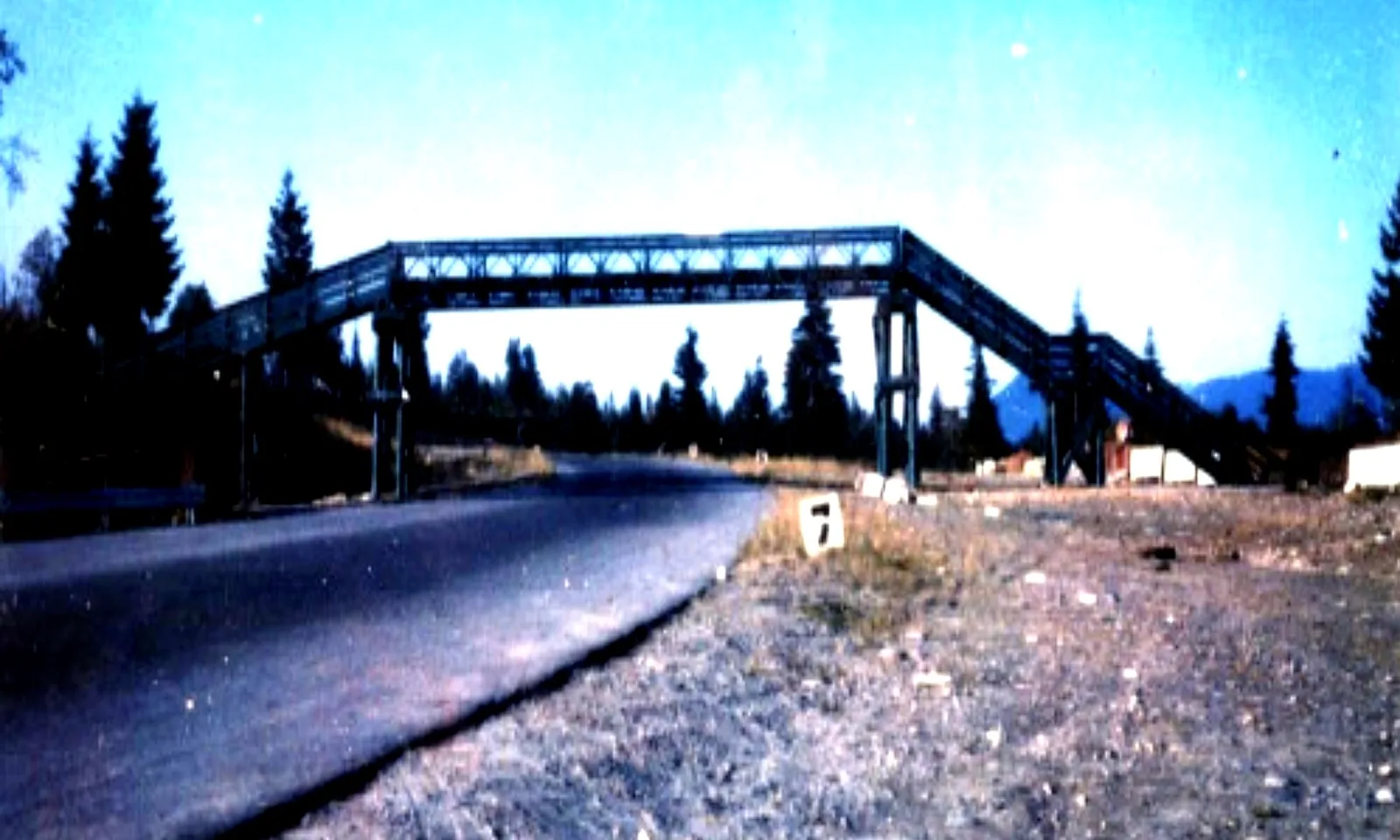
For thirty-two seasons, Coquitlam was a motorsport town. From its opening day on July 26, 1959 — estimated 20,000 spectators in attendance — until its final season in 1990, Westwood Motorsports Park was Canada's first permanent purpose-built road racing circuit. 2.90 km, eight turns, carved into Eagle Mountain. The Carousel and its 15 degrees of banking. Clubhouse Corner. Valley Corner Curve. The Deer's Leap crest where cars could genuinely fly. Marshalls' Hairpin and its brakes-to-the-limit 180. The track is gone. The corners survive in the street names of Westwood Plateau — Deer's Leap Place, Carousel Crescent, Paddock Drive, Firestone Place, Goodyear Park — and in the memory of an eleven-year-old kid named Craig who stood at the fence with his Dad watching IROC-Zs race and Richard Dean Anderson, the actor who played MacGyver, drive his white Honda Civic in club competition.
This page is Coquitlam's lost-motorsport-era record, written by someone who was there for the last few years of it. It is also the answer to a question almost nobody asks anymore: what was on this hill before the houses, the golf course, and the Plateau-named subdivisions arrived?
For a generational Coquitlam family that watched the track close and the houses go up afterward, this is not history found in a book. It is residency. The corners are still where the corners were. The street grid still tells the story.
Burke Mountain runs its own cycle — heavy new construction weight, faster turnover on presales, and a price band that sits above broader Coquitlam averages. Here is what to actually expect.
Westwood Plateau today
Westwood Plateau is the residential and golf-course community that replaced the racing circuit. The build-out started in the early 1990s after the track closed, and the broad shape of the neighbourhood today — the 18-hole championship golf course at its centre, the executive-tier residential pockets that ring it, the curving streets that hug the original topography — is essentially the layout the developer drew up in the wake of the closure.
For families considering a move to the Plateau, the relevant context is this: the neighbourhood is fully built out, the streetscape has matured into the kind of treed, established character you cannot fake with new construction, and the Plateau has earned a quietly distinct identity within the broader Tri-Cities — less aggressively new than upper Burke, less waterfront-driven than Heritage Mountain, more golf-course-and-view-corridor than either. It is its own place.
Geography
The Plateau sits on a wooded bench of land above Coquitlam Centre and the Lougheed corridor. Eagle Mountain rises to the east, Como Lake sits to the south, and the lower slopes feed down toward the SkyTrain corridor. The elevation gives most of the Plateau either a south-facing view, a treed-private back yard, or both.
Build-out era
The earliest residential phases hit the market shortly after the track closure. Subsequent phases rolled through the late 1990s and into the 2000s. Today the neighbourhood is essentially built out — meaning what you see is what you get, and the streetscape feels established in a way newer Tri-Cities subdivisions do not yet.
Character
The Westwood Plateau Golf and Country Club is the centrepiece amenity for the community. Lots backing onto fairways carry a meaningful premium. View corridors — especially south-facing and west-facing — carry their own premium. The home tier sits firmly in executive-and-above, with a strong move-up buyer pool from across the Tri-Cities.
Plateau pockets · what residents call them
Newcomers see "Westwood Plateau" on a listing and assume that is the name of the neighbourhood. Residents see "Westwood Plateau" and immediately ask which pocket. Each one has its own street character, its own price band, and its own buyer pool.
Premium Plateau pocket, view corridors, larger lots, executive home tier. One of the strongest resale-stable pockets on the Plateau.
Top-tier Plateau pricing — golf-course frontage adjacency, premium custom builds, view properties dominate the resale comp set.
Family-focused Plateau detached. Catchment-anchored, mature streets, mixed phases. A consistent move-up target for families.
Cedar-named streets, family demographic, established detached tier with mature landscaping that newer Tri-Cities areas cannot match.
Mid-tier Plateau, family detached, school-driven buyer pool. Less premium than the golf-frontage pockets but consistent value.
Carriage Hills-named streets, family demographic, mature landscaping. The kind of street where neighbours stay decades and resale runs steady.
Plateau pocket bordering forested edge. Trail access, family pull, lot premium triggers tied to view corridor and treed back yards.
Higher-elevation pocket within the Plateau, view-tier dominant, often south- or west-facing premium positions.
Westwood Plateau schools
Westwood Plateau sits within the Coquitlam School District (SD43). Like everywhere else in the Tri-Cities, Plateau catchments can shift across phases of the neighbourhood — some streets near the boundary feed into different elementaries depending on the year a student starts — so the only honest way to confirm a catchment is to look up the address on the SD43 catchment finder before writing an offer. With that caveat in place, here are the schools most commonly tied to Plateau pockets.
Elementary
Long-time catchment anchor for several Plateau pockets. K–5 enrolment, established staff continuity, strong parent community. Confirm by exact address.
Elementary
Serves portions of the Plateau and surrounding upper-Coquitlam streets. Mature enrolment, well-established programs.
Middle & Secondary
A common secondary destination for Plateau families, with academic and athletic programs that have anchored Coquitlam family decisions for decades. Catchment varies by exact address — some Plateau pockets feed into Pinetree, others into Centennial.
For verified catchment information by exact address, use the SD43 (Coquitlam School District) online catchment finder. School assignments shift periodically, and a catchment that was true five years ago for a specific street may have changed.
Plateau outdoors
A lot of what makes the Plateau livable does not show up on the listing photos. The neighbourhood sits at the edge of a serious outdoor-recreation network — trail systems, parks, and access points that residents use weekly without thinking about them as tourism. Here is the resident's short list.
The 18-hole championship course is the centrepiece amenity. Plateau residents walk the cart paths in the off-season, run them in the early morning, and treat the course as a community open space. Frontage lots back onto specific holes — including the 14th and 15th, which catch enough snow some winters that local residents have been known to snowboard them.
Eagle Mountain rises immediately east of the Plateau. Trail access points feed off Eagle Mountain Drive (Anmore side) into a serious mountain biking and hiking network. For Plateau residents who want a real workout in real wilderness without a long drive, this is the closest answer.
The Crunch — the steep elevation-gain training trail that runs up the Lower Mainland's eastern slopes — has multiple feeder routes from the Plateau side. A lot of Plateau residents use it as their default cardio trail.
The forested ravines that thread through the Plateau's residential streets are not just decorative. They are working salmon-bearing creek systems with public-access walking trails connecting back to the broader Coquitlam green-space network.
Sasamat Lake at White Pine Beach for swimming and family days; Belcarra Regional Park and Indian Arm boat-launch access for the families who keep a boat or want one. From most Plateau pockets, both are inside a 15-minute drive.
South of the Plateau. The lower-mainland classic loop walk — flat, paved, dog-friendly. A staple of Plateau-resident weekend mornings.
Frequently asked
Canada's first permanent purpose-built road racing circuit. Operated for 32 seasons from its opening day on July 26, 1959 (estimated 20,000 spectators in attendance) until its closure in 1990. The 2.90 km, 8-turn circuit ran on Eagle Mountain in Coquitlam, BC, and hosted Pro-Atlantic, Trans-Am, NASCAR, IMSA, IROC-style, and Canadian championship sports car events. The site is now occupied by the Westwood Plateau golf course and residential development.
Eight turns over 2.90 km. The verified named corners are The Carousel (Turn 1 — banked 15 degrees, easy to overcook in either dry or wet conditions), Clubhouse Corner (Turn 2), Valley Corner Curve (Turn 3), Deer's Leap (the crest in the long straight after Turn 3 where cars could fly off the circuit), Marshalls' Hairpin (Turn 5 — a sharp 180-degree braking-zone test), and The Esses (the steep S-curve climb back to the start/finish line).
No. The actor who played MacGyver — Richard Dean Anderson — raced at Westwood as a hobbyist club racer when his shooting schedule allowed. He drove a white Honda Civic in production-class competition. Locals who attended Westwood race weekends in the 1980s remember him on the entry list. He was racing, not filming a TV episode.
Yes. Greg Moore — the IndyCar driver who won five CART races for Forsythe Racing before his fatal Fontana accident in 1999 at age 24 — got his start in karting at Westwood as a young local driver in the 1980s. Greg Moore is the most famous driver to come out of the Westwood pipeline.
Deer's Leap Place, Carousel Crescent, Paddock Drive, and Firestone Place all carry names that originated at Westwood Motorsports Park. Goodyear Park is a community park named after the same era. If you live on one of those streets, your address is built on or near a piece of the original racetrack.
On Eagle Mountain in Coquitlam, BC, on the land that today is occupied by the Westwood Plateau golf course and surrounding residential development. The 17th and 18th tee boxes at Westwood Plateau Golf Course sit on the original track footprint, and the faint outline of the stretch from Turn 3 to Deer's Leap is reportedly still visible through the trees in places.
The land lease ended in 1990 and the property was sold to developers. The circuit was bulldozed to make way for the Westwood Plateau housing development and 18-hole championship golf course. The Sports Car Club of British Columbia tried to relocate the program but no replacement circuit was ever built that matched what Westwood had been for 32 seasons.
For many move-up families, yes. The Plateau is a fully built-out, established neighbourhood with mature streets, treed lots, golf-course-anchored amenity, and SD43 catchment options that have served Coquitlam families consistently for decades. The neighbourhood works particularly well for families with kids in the elementary-through-secondary range who want established community feel and meaningful outdoor access close to home.
Plateau pockets historically feed Hampton Park Elementary or Bramblewood Elementary at the K–5 level, and Pinetree Secondary or Centennial Secondary at the high school level — though catchments shift over time and depend on exact address. Always confirm using the SD43 catchment finder before writing an offer.
Eaglecreek, Westwood Estates, Falcon Ridge, Cedar Forest, Plateau Heights, Carriage Hills, Forest Park, and Mountain Highlands are the most commonly named pockets. Each has its own street character, price band, and buyer pool.
Eagle Mountain. Trail access feeds off Eagle Mountain Drive on the Anmore side, with serious cross-country and downhill networks within reach. The Plateau's eastern boundary sits close enough that a Plateau resident can be on the Eagle Mountain trails inside a 10–15 minute drive.
There is no formal monument or interpretive plaque. The track survives in the layout of the residential streets, the corner-derived street names (Deer's Leap Place, Carousel Crescent, Paddock Drive, Firestone Place, Goodyear Park), and the 17th and 18th tee boxes at Westwood Plateau Golf Course.
Continue your Westwood Plateau research
Hub page
The full Plateau master guide — pockets, schools, market context, lifestyle.
For sellers & buyers
How to choose a Plateau-specialist agent and what makes the wedge.
Honest read
Where the Plateau wins and where it does not — from a resident's read.
For families
SD43 catchments that anchor Plateau family decisions.
Comparison
The most common Tri-Cities decision — how to make it.
Legacy authority
Craig's lifetime residency record — the broader Tri-Cities legacy story.
Craig Johnston is a generational Coquitlam REALTOR® who attended Glen Elementary in the early 1980s, captained Division 1 youth soccer at the (sloped) Glen Park, watched MacGyver film at the Westwood Racing Circuit at age 10, raced cars on the Plateau before any houses were built, and snowboarded the 14th and 15th holes of the golf course in winter. Today he lives on Burke Mountain — but his family has breathed Coquitlam air for over 50 years, and his read on the Plateau market is grounded in the kind of residency no other Tri-Cities REALTOR® can claim.