Sold by Craig
Blog
Free Home Eval Call Craig
Non-resident taxes · BC · 2026

BC Foreign Buyer & Speculation Tax — What Non-Residents Pay in 2026

BC imposes three overlapping rules on non-resident residential buyers: the federal Prohibition on the Purchase of Residential Property by Non-Canadians Act (in force until January 1, 2027), the provincial Additional Property Transfer Tax of 20% on foreign-national purchases, and the annual Speculation and Vacancy Tax (SVT), which for foreign owners and untaxed worldwide earners is 3% of assessed value in 2026 and 4% from 2027 when no exemption applies. This page walks through exactly who each rule catches and what they cost.

Craig works regularly with returning-Canadian buyers, permanent-resident purchasers, and corporate relocations — the three groups most often caught off-guard by these rules. Every number below is drawn from the BC Ministry of Finance (including the 2026 and 2027 SVT rate increases) and the federal government's February 4, 2024 announcement extending the ban to January 1, 2027.

5.0 across 35+ Google reviews Top 1% Team — Greater Vancouver REALTORS®, 2023–2025 47+ years in the Tri-Cities
1%
Ranked
Top 1% Team — Greater Vancouver REALTORS®, 2023–2025
2%
Nationwide
Top 2% Team — Royal LePage nationwide, 2023–2025
47+
Local
Tri-Cities resident 47+ years
★
Recognized
5.0 · five-star

Quick Answer

What should you know about BC's foreign buyer and speculation taxes?

Three rules apply. The federal ban on non-Canadians buying residential property runs to January 1, 2027, with exceptions for some work-permit holders, students and spouses. BC adds a 20% Additional Property Transfer Tax on foreign nationals' purchases in Metro Vancouver. The Speculation and Vacancy Tax charges foreign owners 3% of assessed value in 2026 (4% from 2027) without an exemption.

The definition

Short answer: the three stacked rules

As of October 2026, three rules apply in sequence. First, the federal Prohibition Act makes it illegal for a non-Canadian to purchase residential property in BC until January 1, 2027 — with specific exemptions for permanent residents, diplomats, refugees, and certain temporary residents. Second, if a foreign national does qualify to buy, BC adds a 20% Additional Property Transfer Tax on the fair market value. Third, the Speculation and Vacancy Tax charges foreign owners and untaxed worldwide earners 3% of assessed value for 2026 (4% from 2027) in any year the home doesn't qualify for an exemption, such as a qualifying tenancy of at least six months.

Official sources

Where the rules live.

Every figure on this page is drawn from primary BC and federal sources listed below. For a live, government-maintained version of each rule, click through — the internet can drift, the official source is always authoritative.

By the numbers
Illustrative taxes on a $1,200,000 Metro Vancouver home bought by a foreign national (where the federal ban allows the purchase)
Line itemRateAmountNotes
General property transfer tax1% to $200K, 2% to $2M$22,000Paid by every buyer
Additional property transfer tax (APTT)20% of fair market value$240,000On the foreign national's share; Metro Vancouver is a specified area
Total property transfer taxes at completion—$262,000Before legal fees and other closing costs
SVT, 2026 tax year (no exemption)3% of assessed value$36,000 per yearAssumes assessed value of $1,200,000
SVT, 2027 tax year onward (no exemption)4% of assessed value$48,000 per yearRate announced by the Province
Federal Underused Housing TaxEliminated$0No UHT for 2025 and later years; 2022–2024 obligations remain

Sources: Province of B.C. property transfer tax, additional property transfer tax and SVT rate pages (gov.bc.ca); CRA Excise and GST/HST News No. 121 (canada.ca). Illustration only. SVT is based on BC Assessment value, which may differ from the purchase price.

Step by step

How to determine your status before making an offer

  1. 1
    Confirm your immigration status as of the offer date. Canadian citizens and permanent residents are fully exempt from the Prohibition Act and the 20% Additional PTT.
  2. 2
    If you hold a work permit, study permit, or Protected Person status, check the specific Prohibition Act exception criteria. Since March 27, 2023, work-permit holders generally qualify if their permit has 183 days or more of validity remaining and they haven't already bought a home; students face income-tax, physical-presence and $500,000 price tests.
  3. 3
    If you are the foreign spouse of a Canadian, the Prohibition Act allows joint purchase with your Canadian spouse — but the Additional PTT still applies on your proportional share.
  4. 4
    Run the Speculation and Vacancy Tax declaration annually. Every owner on title in a designated SVT area, Coquitlam included, receives a declaration letter in January or February and must declare by March 31, even if exempt.
  5. 5
    Engage a BC real estate lawyer who handles non-resident files before writing any offer. CRA Section 116 withholding (25%–50% of the sale price held in trust on sale) applies to non-residents selling a BC home, and affidavits must be prepared in advance.
Craig Johnston, REALTOR® — Coquitlam
Craig's take
The foreign-buyer rules are not there to catch legitimate relocations — they are there to catch non-resident investment buying. If you are moving to BC for a job, studying at a school like SFU or Douglas, or rejoining family in the Tri-Cities, there may be a legal path — the work-permit, student and spousal exceptions exist for exactly these situations, but each has strict tests. But it takes a real estate lawyer and a realtor who understand the rules before the offer is signed, not after.

— Craig Johnston, REALTOR® · Royal LePage Elite West · Tri-Cities resident 47+ years

Ready to turn this knowledge into a real transaction?

Whether you're a first-time buyer trying to master the rules or a move-up family planning your next step, a 20-minute strategy call maps out exactly what applies to your situation.

Book a Strategy Call → Get a Home Evaluation

What changes if the federal ban lapses on January 1, 2027

The federal Prohibition on the Purchase of Residential Property by Non-Canadians Act took effect January 1, 2023. On February 4, 2024, the Government of Canada extended it by two years to January 1, 2027. As of early October 2026, CMHC and the federal government have not published a further extension, so check the official CMHC page before acting on any timeline.

If the ban lapses as scheduled, it removes only the federal prohibition. The BC taxes are separate provincial laws and don't depend on the federal ban:

  • Additional Property Transfer Tax. 20% of fair market value on a foreign national's, foreign corporation's or taxable trustee's share of residential property in the Metro Vancouver, Fraser Valley, Capital, Central Okanagan and Nanaimo regional districts, paid at registration on top of the regular property transfer tax.
  • Speculation and Vacancy Tax. Every owner in a designated SVT area declares by March 31 each year. That includes Coquitlam, Port Coquitlam, Port Moody, Anmore and Belcarra. Without an exemption, foreign owners and untaxed worldwide earners pay 3% of assessed value for 2026 and 4% from 2027.

One federal tax has gone the other way. The Underused Housing Tax, a 1% annual tax that applied mainly to non-Canadian owners, has been eliminated for the 2025 and later calendar years. Returns and payments for 2022 to 2024 still stand.

In practice, a foreign national weighing a Metro Vancouver purchase after January 1, 2027 should budget for the 20% APTT at completion and plan from day one how the home will qualify for an SVT exemption, usually a tenancy of at least six months a year. Otherwise, the annual SVT bill on a home assessed at $1,200,000 would be $48,000 at the 2027 rate.

This section describes the rules as published; it isn't legal or tax advice. A real estate lawyer who handles non-resident files should confirm your position before you sign.

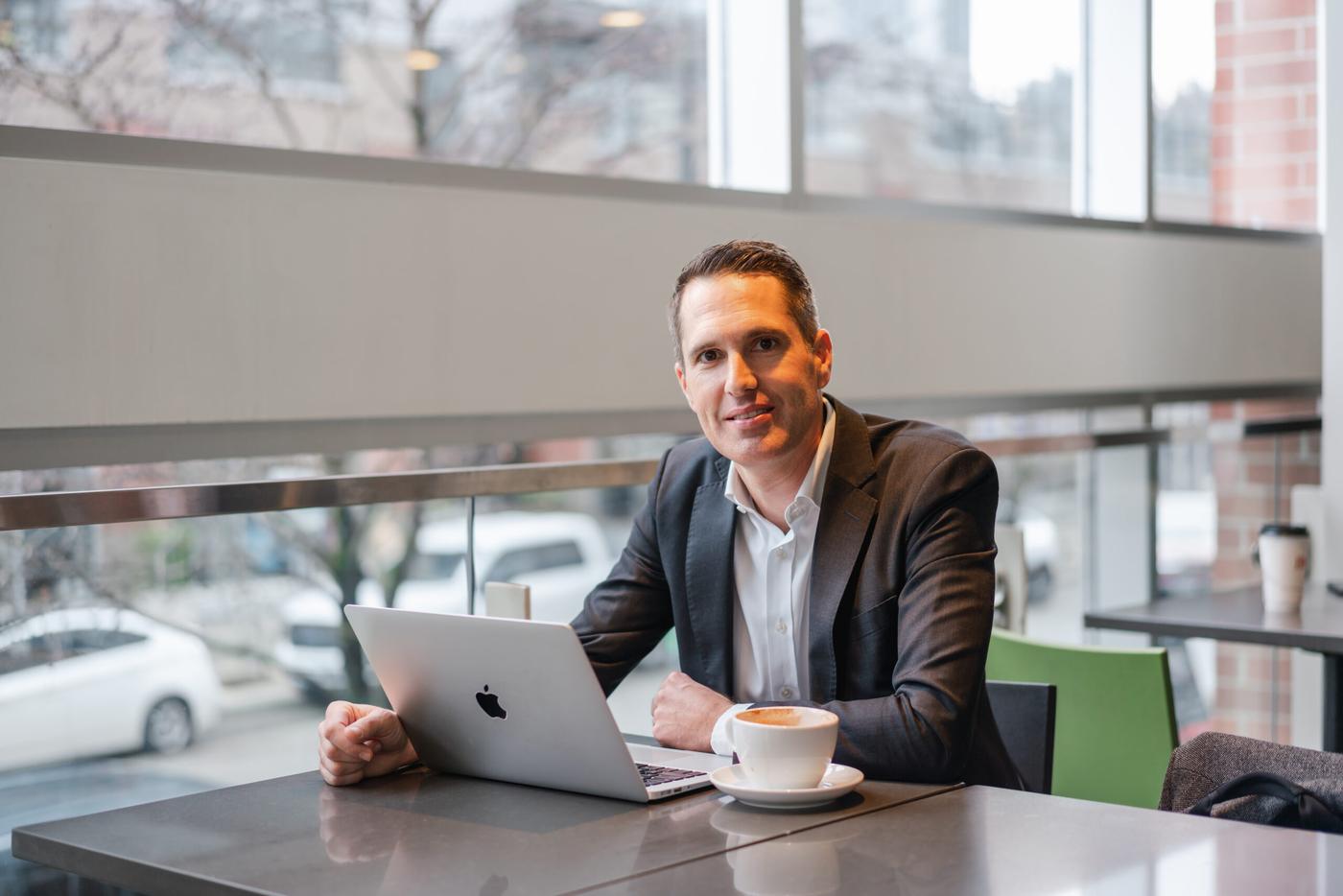
How I work

How I check a non-Canadian buyer's position, step by step

With foreign-buyer rules, the order matters: confirm whether you can buy at all, then what it will cost, then what it will cost to keep. I go through that order before any offer.

  1. Step 1

    Confirm your status first

    I start with your status as of the offer date: citizen, permanent resident, work permit, study permit or protected person. That decides whether the federal ban applies to you and which exception might fit. I then ask you to confirm the details with an immigration or real estate lawyer before we look seriously.

  2. Step 2

    Run the 20% tax numbers

    If you're a foreign national who can buy, I lay out the 20% Additional Property Transfer Tax on your share next to the regular PTT. I also flag whether a BC Provincial Nominee exemption or a later PR refund might apply, so the cash needed at completion isn't a surprise.

  3. Step 3

    Plan the title split with your lawyer

    When a Canadian spouse or relative is buying with you, the percentages on title change both the APTT and the SVT exposure. I raise this early so your lawyer can set the ownership shares deliberately, rather than by default, on the Form A transfer.

  4. Step 4

    Map the ongoing SVT exposure

    Before you commit, I look at how the home will be used each year. Foreign owners pay 3% in 2026 and 4% from 2027 without an exemption, and family-tenant rules are stricter. I also cover the yearly declaration every owner on title must file by March 31.

For examples of how I've worked through detailed purchase situations, see my Tri-Cities case studies. Read the Tri-Cities case studies →

Book a 20-min Strategy Call What’s My Home Worth?
FAQ

Buying in BC from outside Canada — your questions, answered

Who is a 'non-Canadian' under the federal Prohibition Act?

Anyone who isn't a Canadian citizen, a permanent resident, or a person registered under the Indian Act. It also covers corporations controlled by non-Canadians, with a 10% threshold for private corporations since March 2023. Some non-Canadians can still buy under exceptions: work-permit holders with at least 183 days left on their permit, qualifying students, refugees and protected persons, diplomats, and a non-Canadian spouse buying jointly with an eligible spouse.

Can an international student buy a home in the Tri-Cities?

Only in limited cases while the federal ban is in force. The student exception requires meeting income-tax filing and physical-presence requirements in Canada, and the purchase price can't exceed $500,000. In Coquitlam, Port Moody and Port Coquitlam, that generally means a smaller apartment. For context, the August 2026 Coquitlam apartment benchmark was $646,100. A student who qualifies still pays BC's 20% Additional Property Transfer Tax as a foreign national.

Does a work-permit holder who is allowed to buy still pay the 20% additional tax?

Yes, in most cases. Meeting the federal ban's work-permit exception only means you're allowed to buy. BC still treats you as a foreign national, so the 20% Additional Property Transfer Tax applies to your share of a home in Metro Vancouver or another specified area. The main exemption at purchase is for BC Provincial Nominees whose nomination is confirmed, if the home becomes their principal residence. Otherwise, the route is a refund after becoming a permanent resident within a year.

Can a foreign national buyer get the 20% Additional PTT refunded?

Yes, if you become a permanent resident or Canadian citizen within one year of the transfer being registered. You must also move in within 92 days of registration and live there as your principal residence for at least one continuous year. Apply after the first anniversary of moving in and before 18 months from registration. Your PR effective date comes from your COPR or PR card, not an approval letter, and anyone who used the Provincial Nominee exemption can't also claim this refund.

Does the 20% additional tax apply if only one buyer on title is a foreign national?

It applies only to the foreign national's share. The tax is calculated on the proportion of interest the foreign entity registers on title. For example, a foreign national taking 50% of a $1,200,000 Port Moody townhouse pays 20% on $600,000, or $120,000, while the Canadian co-owner pays only the regular property transfer tax. How you split title affects this, so settle the percentages with your lawyer before completion. See property transfer tax explained.

Does the foreign buyer ban apply to recreational property?

Only in urban areas. The ban covers residential property, meaning buildings of up to three dwelling units and condos, in Census Metropolitan Areas (100,000+ people) and Census Agglomerations (10,000+ people). Recreational property outside those areas isn't caught. Coquitlam, Port Coquitlam, Port Moody, Anmore and Belcarra all fall within the Vancouver CMA. Since March 27, 2023, vacant land zoned residential or mixed-use is excluded from the ban. The 20% BC tax still applies to residential purchases anywhere in Metro Vancouver.

How does the SVT treat a foreign owner differently?

The rate is higher and the family-tenant rules are stricter. Without an exemption, a foreign owner pays 3% of assessed value for 2026 and 4% from 2027, compared with 1% for Canadian citizens and permanent residents. Letting a relative live there qualifies only if they're a Canadian citizen or PR, a B.C. resident, and have B.C. income of at least three times the annual fair market rent. Foreign owners who report B.C. income may claim a credit against the tax.

Verified Google reviews

What clients say.

5.0 stars across 35+ verified Google reviews. Three from recent clients below.

★★★★★
“One of the sales was my Mom’s home. She is 97 and so this was a very emotional issue to be leaving her beloved home of so many years… Craig was extremely patient in explaining the market and was very sensitive to her concerns. We can’t thank him enough for his empathy and understanding in working with an elderly person through a difficult time in a very caring manor!”
Ann English
3 transactions · Sensitive elderly-client work · March 2024 · Google Review
★★★★★
“Craig is a true professional and I would highly recommend him to anyone looking to buy or sell their home. His approach is clear, data-driven and resulted in multiple offers for our sale.”
Robert Shin
Multiple offers on sale · July 2025 · Google Review
★★★★★
“Craig Johnston recently sold my townhouse in West Vancouver in less than 6 days for over asking price!!!!! Craig is one of the most prolific and highly motivated realtors I have seen in the Realty business, and I have extensive experience buying and selling properties of all sorts.”
Riverplate Equities
Seller · November 2023 · Google Review

Read all the reviews →

Ready for a second opinion on your own situation? Book a 20-minute strategy call, or if you own now, get a free Equity Map of what your home is worth.

Next reads

Build the full picture.

Craig Johnston, REALTOR®
Your REALTOR®

Craig Johnston, REALTOR®

BCFSA-licensed REALTOR® (V99960). 47+ years Tri-Cities. Top 2% Team — Royal LePage nationwide, 2023–2025. Works across Metro Vancouver, with a focus on Coquitlam, Port Moody and Port Coquitlam transactions across resale, new construction, and strata. The same rules above apply on every deal, and I check where a buyer stands on each of them before an offer is written.

Strategy Call Call 604-202-6092
Next reads

Keep reading.

Tri-Cities monthly

Know the market before you make an offer.

August 2026 Coquitlam detached HPI is $1,599,100, -5.9% YoY. What that means for your buy or sell decision — without the salesy fluff. One email per month. Unsubscribe anytime.

No spam, no listings flood, no marketing automation games. Genuine monthly update from a 47+ year Tri-Cities resident.

Best REALTOR® by area

A specialist for your specific Tri-Cities city or neighbourhood.

Or compare all Tri-Cities specialists →
Book a Call Home Eval